Wondering whether a Loyal Heights home will actually work for your daily routine, not just look good in listing photos? If you work from home even part of the week, the right house needs more than an extra bedroom and decent Wi-Fi. In Loyal Heights, your best move is to look closely at layout, light, sound, and nearby backup work options before you fall for finishes alone. Let’s dive in.
Why Loyal Heights Deserves a Closer Look
Loyal Heights offers a housing mix that can be appealing for remote and hybrid workers, but it also asks you to be selective. Telework is still common, with the Bureau of Labor Statistics reporting that 22.6% of workers teleworked in March 2026.
That matters because your home may need to do more jobs than it used to. It is not just where you live. It may also be where you take calls, focus for long stretches, and switch between work and home life without much separation.
In Loyal Heights, the housing stock is varied. King County Assessor Area 019, which includes West Ballard, Loyal Heights, and Crown Hill, has a large share of established homes, with about 41% built before 1930.
Within the Loyal Heights and Crown Hill subarea, the average home size is about 1,470 square feet, and roughly 44% of homes were built before 1930. That often means charm, mature surroundings, and established blocks, but it can also mean smaller rooms, older layouts, and work-from-home updates you may need to plan for.
There is also a newer side to the inventory. In the higher-density subarea to the south, townhome construction has been active since the late 1990s, and 1,019 townhomes have been built since 2015.
For you as a buyer, that usually creates a tradeoff. Older detached homes may offer more separation or yard space, while newer townhomes may bring updated interiors and more modern systems, but sometimes less acoustic privacy.
Prioritize Layout Over Square Footage
When you work from home, a flexible layout often matters more than raw size. A smaller home with one truly usable office can outperform a larger home with only open gathering space.
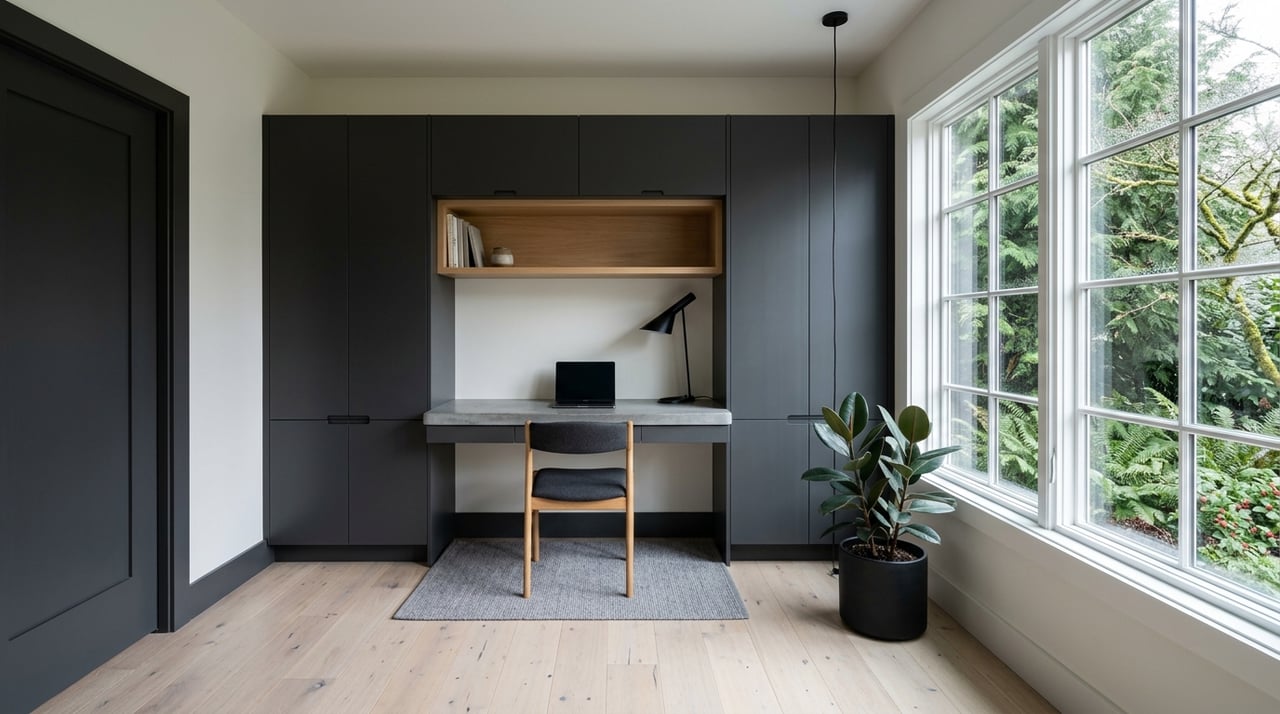
The most practical setups usually include a room that can close off from the rest of the house. That could be a den, a bedroom with a door, a finished lower level, or an upper-floor room that gives you visual and sound separation.
This is especially important in Loyal Heights because many homes reflect older design patterns. A visually appealing alcove or loft may look fine online, but it may not hold up well if you spend hours on video calls or need privacy during the day.
When reviewing listings, look for signs of a separable work zone:
- A den identified on the floor plan
- A bedroom with a door and closet
- A lower-level family room or finished basement
- A loft or flex room that could potentially be enclosed
- Clear distance between the workspace and main living areas
If the listing only shows a desk tucked into a hallway, landing, or dining corner, treat that as staging, not proof of a real office solution.
Focus on Daylight, But Control Glare
Natural light is one of the most valuable home-office features, but only when it works with your routine. Department of Energy research on daylight found that access to natural light in workplace settings is associated with better wellness, better sleep, fewer headaches, reduced eyestrain, and higher job satisfaction.
That said, bright does not always mean comfortable. The same research notes that glare and heat gain can reduce those benefits if shading is not handled well.
In practical terms, you want more than a sunny room. You want a space where you can work comfortably across the day without battling harsh light on your screen or overheating by midafternoon.
When touring or reviewing photos, pay attention to:
- Window orientation
- Whether there are blinds, shades, or other glare-control options
- How the room looks in midday light
- Whether your desk could face away from direct glare
- Whether large windows seem functional or just photogenic
If a home looks unusually bright in photos, ask whether that reflects actual daylight or heavy staging and artificial lighting. A floor plan or additional daytime photos can reveal a lot.
Pay Attention to Sound Separation
For many remote workers, noise is the make-or-break issue. You can improve furniture or lighting later, but poor acoustics are much harder to live with if your work involves regular meetings or concentrated tasks.
Guidance from the National Institutes of Health on open-office acoustics notes that speech is especially distracting when it is intelligible. It also points to quiet rooms, sound-absorbing materials, and stronger separation as effective ways to support focus and privacy.
The basic takeaway for buyers is simple. A real room with a door usually works better than a stylish open bonus area.
This is especially relevant in Loyal Heights, where the housing mix includes both older homes and newer townhomes. Each can come with acoustic compromises, just in different forms.
Sound Clues to Watch For
During showings or photo reviews, look for features that may reduce sound privacy:
- Open staircases
- Large great rooms
- Hard flooring throughout
- Glass-heavy railings or partitions
- Thin separation between living and sleeping areas
- Office space directly off the kitchen or main entry
A lower-level room, back bedroom, or tucked-away den may be more useful than a larger but open upper-floor landing. If your workday includes calls, interviews, or client meetings, that distinction matters.
Read the Block, Not Just the House
In Loyal Heights, block-by-block location can shape your workday almost as much as the home itself. A Seattle landmark report places Loyal Heights roughly between NW 65th and NW 85th Streets, west of 15th Avenue NW to Puget Sound, with commercial zoning along 15th Avenue NW and Seaview Avenue NW.
That matters because homes closer to busier corridors may pick up more traffic, deliveries, and everyday neighborhood activity. Homes deeper inside residential blocks may offer a quieter feel, even if the square footage is similar.
If you work from home often, think carefully about how the immediate setting fits your routine. A beautifully updated house on a more active corridor may be less workable than a simpler home on a quieter interior street.
Local Activity That Can Affect Your Day
For homes near the Loyal Heights Community Center and playfield campus, it is smart to consider daytime activity patterns. The city notes that the campus includes a large green space, a small play area, and a lighted synthetic athletic field used for sports and special events.
That does not make nearby homes less desirable. It simply means you should evaluate how open windows, call schedules, privacy needs, and general daytime noise fit with that setting.
Use Nearby Third Places as a Backup Plan
Even with a strong home setup, it helps to have a reliable place nearby when you need a change of scene. For Loyal Heights buyers, this is not a small detail. It can meaningfully expand how well a home works over time.
The strongest nearby option in the research is the Ballard Branch of The Seattle Public Library. According to the library, the branch is a place to meet, study, work, or read, and it offers free Wi-Fi, three study rooms, a quiet room, seating with electrical outlets, 16 computers, printer/copier/scanner access, transit access, and free parking.
That makes it a practical fallback when your home office feels cramped or noisy. It can also be useful for focused work blocks, printing needs, or meetings that are easier to handle outside the house.
The Loyal Heights Community Center is a different kind of support space, but still worth noting. Seattle Parks lists Wi-Fi, meeting rooms, air conditioning, and other indoor facilities, which may be helpful for short work sessions or day-to-day coordination.
Understand the Price-Point Tradeoffs
In Loyal Heights, your budget may shape office functionality as much as finishes or style. Current market snapshots vary by source, but both suggest a competitive environment where buyers need to stay disciplined.
Realtor.com's April 2026 summary shows 35 homes for sale, a median listing price of $825,000, and a median 21 days on market. Redfin, using a different three-month window ending March 2026, reports a median sale price near $1.1 million.
Because those sources use different methods, the numbers are best viewed as directional rather than exact pricing guidance. The broader message is that you should expect choices and tradeoffs, not a perfect all-in-one solution at every budget level.
In general:
- Lower and mid-range options may mean older detached homes or townhomes with smaller rooms
- Older homes may offer character and separation, but could need office-related updates
- Newer townhomes may offer cleaner layouts and newer systems, but sometimes less sound buffering
- Higher budgets may improve your odds of finding a renovated detached home with a true office, finished lower level, or stronger separation between work and living areas
This is where a disciplined search matters. Instead of starting with cosmetic wish lists, start with your daily workflow and evaluate each home against that standard.
A Practical Loyal Heights Checklist
Before making an offer, ask yourself these work-from-home questions:
- Can you take calls behind a closed door?
- Is there enough daylight without constant glare?
- Does the layout separate work space from the busiest parts of the home?
- Are nearby streets or activity zones likely to affect your workday?
- Does the home offer a flex room that can adapt over time?
- Do you have a nearby backup workspace if home gets noisy?
If a property scores well on those basics, it may serve you better than a larger or more polished home that lacks daily function.
A smart Loyal Heights purchase is not just about finding a home you like today. It is about choosing one that supports how you actually live and work.
If you are weighing Loyal Heights against other Seattle neighborhoods, or trying to compare an older detached home with a newer townhome, a data-driven approach can help you avoid expensive compromises. For a tailored buying strategy in Seattle, connect with Adam Bradley.
FAQs
What matters most in a Loyal Heights home office setup?
- The biggest priorities are a separable workspace, good natural light with glare control, and enough sound separation for calls and focused work.
Are older Loyal Heights homes good for working from home?
- They can be, especially if they offer enclosed rooms or lower-level space, but many older homes may also have smaller rooms and layouts that need careful evaluation.
Are Loyal Heights townhomes good for remote work?
- Some are a strong fit because they may offer newer layouts and systems, but buyers should pay close attention to sound transfer and how separated the work area is from main living spaces.
How can you judge work-from-home potential from a Loyal Heights listing?
- Look for a den, enclosed bedroom, lower-level family room, or another clearly defined flex space, and review photos for light quality, glare risk, and acoustic clues like open staircases or large hard-surface rooms.
What nearby Loyal Heights area spaces can support remote work?
- The Ballard Branch of The Seattle Public Library stands out as a strong off-site option, and the Loyal Heights Community Center may also be useful for shorter work sessions or local coordination.
How does location within Loyal Heights affect remote work?
- Homes near busier corridors or active community spaces may experience more daytime noise and activity, while homes on quieter interior residential blocks may offer better day-to-day work conditions.